
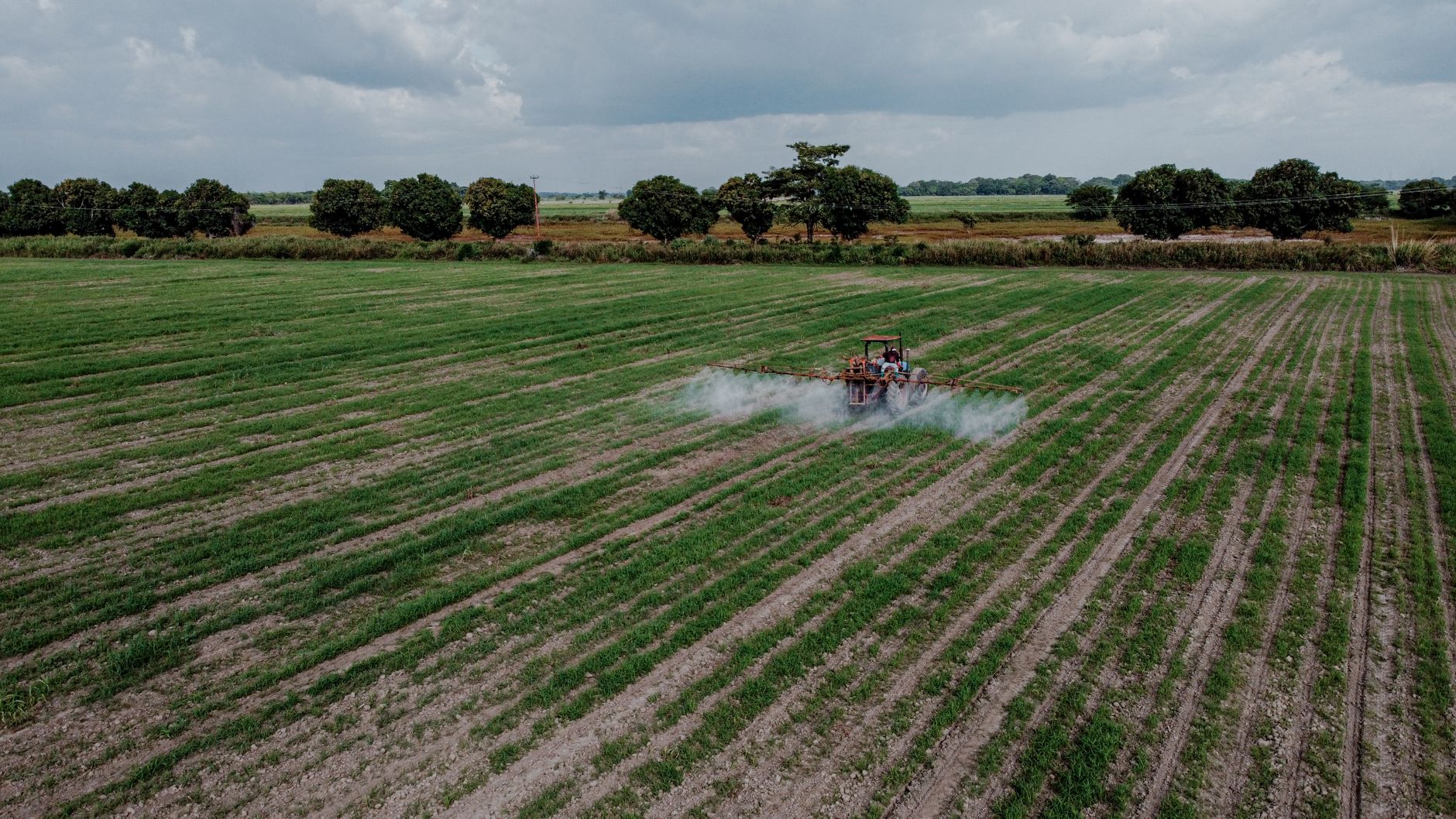
Regulatory restrictions on synthetic pesticides and expanding export-oriented agriculture are driving sustained demand for biological pest-control solutions.
NEW YORK, July 18, 2026 — The global biopesticides market was valued at USD 4.15 billion in 2025 and is estimated to reach USD 4.47 billion in 2026, according to Agriculture Industry Insights. The market is projected to expand to USD 8.42 billion by 2035, growing at a compound annual growth rate (CAGR) of 7.5% between 2026 and 2035. This expansion reflects accelerating regulatory restrictions on synthetic pesticides across major agricultural regions, rising demand from export-oriented produce supply chains seeking residue-free certification, and growing farmer adoption of integrated pest management (IPM) practices. Agrochemical companies, biotech developers, and agricultural input suppliers are the primary stakeholders driving this market transformation.
Asia-Pacific anchored the market with approximately USD 1.58 billion in 2025, representing roughly 38% of global revenue, while Latin America is projected to grow fastest, expanding at an 8.9% CAGR from 2026 to 2035 as coffee, sugarcane, and fruit exporters increasingly adopt biopesticides to meet international sustainability mandates.
Key Findings
- Microbial Biopesticides dominated the product-type segment with USD 1.74 billion in 2025, supported by broad-spectrum efficacy and established regulatory approval across North America, Europe, and Asia-Pacific.
- Biochemical Biopesticides is the fastest-growing product type, expanding at a 9.2% CAGR from 2026 to 2035, as pheromone-based mating disruption and plant-extract insecticides gain adoption among integrated pest management practitioners.
- Cereals & Grains remained the leading crop segment at USD 1.45 billion in 2025, while Fruits & Vegetables is the fastest-growing crop category at an 8.8% CAGR, driven by premium fresh-produce supply chains mandating residue-free and sustainability requirements.
- Brazil is the fastest-growing major country, projected to expand from USD 0.22 billion in 2025 to USD 0.52 billion by 2035 at a 9.4% CAGR, fueled by coffee, sugarcane, and fruit export growth and international sustainability mandates.
- The market presents an absolute dollar opportunity of USD 3.95 billion between 2026 and 2035, representing cumulative incremental revenue for vendors, distributors, and agricultural input suppliers across all segments and regions.
What Is Driving Growth in the Biopesticides Market?
Regulatory restrictions on synthetic pesticides remain the single largest growth driver for the biopesticides market. The European Union's Sustainable Use of Pesticides Directive and successive restrictions on neonicotinoid insecticides have created a structural demand shift toward biological alternatives across member states. Similarly, the U.S. Environmental Protection Agency (EPA) has tightened approval pathways for new synthetic active ingredients while streamlining registration for biopesticides, effectively tilting the competitive landscape toward microbial and biochemical solutions. Agriculture Industry Insights' analysis indicates that regulatory pressure alone accounts for approximately 2.1 percentage points of the 7.5% forecast CAGR, making it the dominant demand catalyst through 2035. This regulatory tailwind is reinforced by multinational food retailers—including Walmart, Carrefour, and Tesco—mandating residue-free or biopesticide-only sourcing from their produce suppliers, a requirement that cascades through export-oriented supply chains in India, Mexico, and Brazil.
A closely related secondary driver is the expansion of organic farming and premium fresh-produce cultivation in high-value markets. According to Agriculture Industry Insights' proprietary research, organic farmland globally has grown at a 3.2% annual rate over the past five years, with the highest concentration in Europe and North America. Organic farmers are obligated to use only biopesticides and botanical products, creating a structural demand floor that is independent of price competition with synthetic alternatives. Additionally, conventional farmers increasingly adopt biopesticides as part of integrated pest management (IPM) strategies to reduce synthetic pesticide residues, lower worker exposure risk, and meet sustainability certifications. This dual adoption pathway—both organic-mandated and conventional-voluntary—is expected to sustain the 7.5% CAGR throughout the forecast window.
Growth is tempered, however, by the higher cost and variable efficacy of biopesticides relative to synthetic alternatives. Agriculture Industry Insights' analysis indicates that this restraint reduces the CAGR by an estimated 0.4 percentage points, as biopesticides typically cost 1.5 to 3 times more per hectare than conventional chemical pesticides and often require more frequent application or stricter environmental conditions (temperature, humidity, UV exposure) to maintain efficacy. Smallholder farmers in developing regions, who operate on thin margins, remain price-sensitive and reluctant to adopt biopesticides without government subsidies or cooperative purchasing arrangements. Additionally, the shelf life and storage stability of many microbial biopesticides remain inferior to synthetic formulations, complicating supply-chain logistics and increasing inventory risk for distributors. These constraints have slowed adoption in price-sensitive segments, particularly in sub-Saharan Africa and parts of South Asia.
An emerging opportunity lies in the convergence of digital agriculture, precision application technology, and biopesticide formulation innovation. Regulatory guidance from the EPA and the European Food Safety Authority (EFSA) increasingly recognizes precision application systems—including variable-rate sprayers, drone-based delivery, and sensor-guided targeting—as mechanisms to reduce overall pesticide volume while improving efficacy. Biotech companies are developing next-generation biopesticide formulations with enhanced UV stability, extended residual activity, and compatibility with precision-application hardware. Agriculture Industry Insights' assessment suggests that vendors combining proprietary biopesticide chemistry, precision-application partnerships, and digital agronomic advisory services are best positioned to capture premium pricing and accelerate adoption among large-scale conventional farmers through 2035.
Regional Snapshot
Analyst Commentary
"This assessment is reinforced by multinational food retailers' sustainability commitments and the accelerating regulatory restrictions on synthetic pesticides across the EU, North America, and increasingly in Asia-Pacific. M&A activity in the biopesticides space has intensified, with major agrochemical companies acquiring biotech developers to expand their biological product portfolios and gain access to proprietary microbial strains and formulation technologies."
Key Players Shaping the Biopesticides Market
Request for a Sample PDF of the Biopesticides Market Size, Share & Forecast 2026–2035 Market Report to access full segment-level data and company profiles. The underlying report profiles 35+ companies competing across this landscape, including Corteva Agriscience, BASF SE, Syngenta (ChemChina), Bayer CropScience, FMC Corporation, Valent USA, Marrone Bio Innovations, Koppert Biological Systems, Biobest Group, Andermatt Biocontrol, Certis USA, and Nufarm Limited, among others.
Latest Developments in the Biopesticides Market
Marrone Bio Innovations announced the commercial launch of its next-generation Bacillus thuringiensis (Bt) formulation, MBI-401, designed for high-efficacy control of lepidopteran pests in corn and cotton with extended residual activity and improved UV stability, marking a significant advancement in microbial biopesticide performance.
BASF SE completed its acquisition of a leading Indian biotech developer specializing in entomopathogenic fungi and nematodes, expanding BASF's biological pest-control portfolio and establishing a regional manufacturing and R&D hub to serve Asia-Pacific export-oriented agriculture.
Corteva Agriscience partnered with a precision-agriculture technology firm to integrate its biopesticide portfolio with variable-rate application systems and AI-driven pest-monitoring platforms, enabling farmers to optimize biopesticide deployment and reduce overall pesticide volume while maintaining yield protection.
About Agriculture Industry Insights
Agriculture Industry Insights is a market intelligence and research firm delivering syndicated reports, custom studies, and advisory services across high-growth agricultural and food-production industries worldwide. Every Agriculture Industry Insights study follows a single house standard: single-point estimates, MECE segmentation, exact table reconciliation, and exclusively primary and official sources—giving decision-makers market numbers they can audit and act on with confidence.